Date of publication
1 October 2026
Download
Document
Annual Impact Report and Accounts
(5.09 MB)
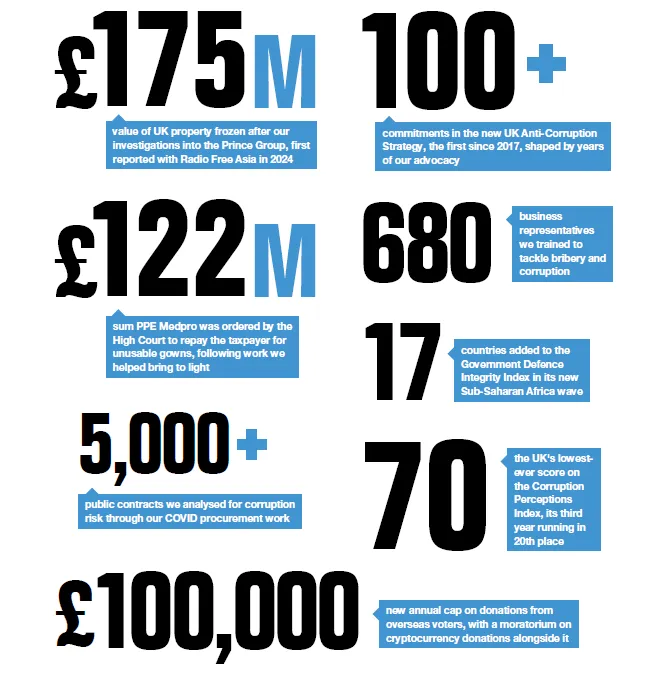
The year in numbers
Welcome from the Chair and Chief Executive
Ask most people to picture corruption and they’ll likely depict cash in a brown envelope. Straightforward bribery: money handed over, influence bought, someone in a position of power enriching themselves and bending events in favour of the bribe payer. That image sits behind Transparency International’s cornerstone definition of corruption, ‘the abuse of entrusted power for private gain’. But the corruption that does most damage to the UK rarely looks like that. It is the overseas billions laundered through British property, the donor writing a seven-figure cheque in exchange for seeing their interests furthered in parliament or the lucrative public contract handed to a political contact. This year showed why that breadth matters.
We have long been told by some in political and public life that, because they had never seen a bribe being paid, the UK doesn’t have a corruption problem. This year was answer enough. Nathan Gill, the former Reform UK leader in Wales, became the first politician to be convicted under the UK Bribery Act; jailed for more than 10 years for taking tens of thousands of pounds in bribes from the Russian state during his time as an MEP. Elsewhere the UK fell to its lowest-ever score in Transparency International’s annual Corruption Perceptions Index, driven by expert concern over political corruption and abuses of power in government.
Gill’s conviction set in train an urgent review into foreign interference in our democracy to which we made significant contributions. The government went on to adopt our recommendation and impose a moratorium on cryptocurrency donations to political parties and a cap on donations from UK voters based overseas. We continue our campaign for a universal cap on all donations, to remove the corrupting influence of big money from our politics.
A welcome development this year was the launch of the UK Government’s much-anticipated national Anti-Corruption Strategy, the first since 2017. Its more than 100 commitments were in no small part shaped by years of our patient and constructive advocacy. The strategy was clear on the complex and corrosive threats corruption poses – including to our national and economic security, though gaps remain that will inform our work in the year ahead.
Meanwhile, the UK remains an attractive destination for corrupt elites from around the world hoping to hide and launder their wealth here. After a decade of our campaigning, the government committed to a long-overdue overhaul of how anti-money laundering rules are policed. Elsewhere our investigations directly fed into a number of asset freezes, including more than £175 million of UK property linked to the Prince Group, following findings we first reported with Radio Free Asia.
Our work with responsible businesses has rarely mattered more. As the global integrity environment deteriorates and enforcement grows less predictable, companies are looking for partners who can help them improve their practices. This year hundreds of anti-bribery and corruption professionals benefitted from our Business Integrity forum events and training, and our long-running research partnership with British International Investment was shortlisted for a Principles for Responsible Investment Award.
Our two global programmes tackling corruption in the defence and security and global health sectors continued to break new ground. As defence spending rises sharply across Europe, we brought together heads of state, parliamentarians, defence companies and the president of the European Central Bank at the influential Munich Security Conference to confront the integrity risks that growth creates. Meanwhile our global health programme launched a major new project examining how corruption blocks women's and girls' access to sexual and reproductive health services across four countries.
This past year has brought into sharp focus the many facets of corruption and how it infects our politics, compromises our democracy and denies citizens the public resources they are owed. It has also shown that our impartial, evidence-based research and persistent, constructive advocacy deliver results: laws changed, regulation overhauled, public accountability for the corrupt and new, innovative solutions to emerging threats.
We sincerely thank all our supporters for making this vital work possible.
Mike Millward, Trustee Board Chair
Daniel Bruce, Chief Executive
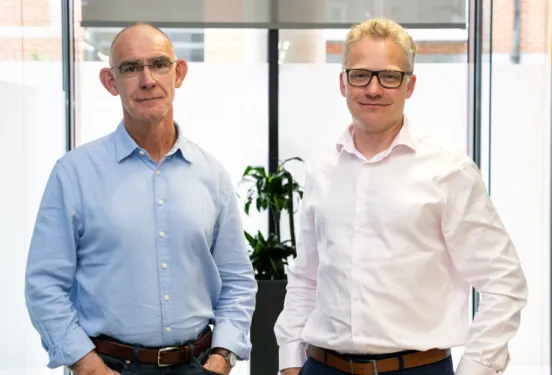
Mike Millward, Trustee Board Chair and Daniel Bruce, Chief Executive
In June 2026, Chief Executive Daniel Bruce informed the board that he had accepted a new role as Chief Corporate Affairs Officer at Channel 4 Television. The board would like to acknowledge Daniel's outstanding leadership over the past seven years. He took the helm in 2019 and steered TI-UK through the pandemic and beyond with vision, determination and care, leaving the organisation stronger, sharper and more influential than ever. We are deeply grateful for the legacy he leaves and wish him every success in his new role at Channel 4.
The Board has commenced a recruitment process for a new Chief Executive while Duncan Hames, Senior Director of Policy and UK Programmes, will lead the organisation on an interim basis from late September 2026.
2025 Corruption Perceptions Index
Is corruption becoming the new normal?
When the 2025 Corruption Perceptions Index (CPI) was published in early 2026, the UK recorded its lowest-ever score. At 70 points, it sat 20th in the global ranking for the third consecutive year, a long way from the top-10 position it held in 2017.
Like its predecessor, the current government has struggled to avoid a steady stream of scandals such as the relationship between a former British ambassador to the US and a convicted sex offender, allegations of smear campaigns against journalists, or ministerial links to international corruption cases. We continue to warn that this does significant damage to public trust and increases concerns about political corruption.
That is why the central question this year is whether corruption is quietly becoming the new normal in Britain. Our answer is that decline is a choice and not an inevitability. The same evidence that drags the UK's score down points both to what would lift it and to the fact the government has the tools to act.
We renewed our call for the government to:
- Take big money out of politics: place a meaningful cap on donations, reduce campaign spending limits, increase transparency over the source of funds entering politics, and strengthen the Electoral Commission.
- Deliver open government: extend transparency requirements to all lobbyists and require more detail about their interactions, including the form and date of communications, what the lobbyists are trying to influence and the specific ministers and officials targeted – as is already the case in countries like Canada, Germany, the US and Scotland.
- End cronyism and corruption in Parliament: stop corruption-prone practices that bring our legislature into disrepute, including MPs holding second jobs; reforming the process for making appointments to the Lords; and removing those found to have engaged in serious misconduct.
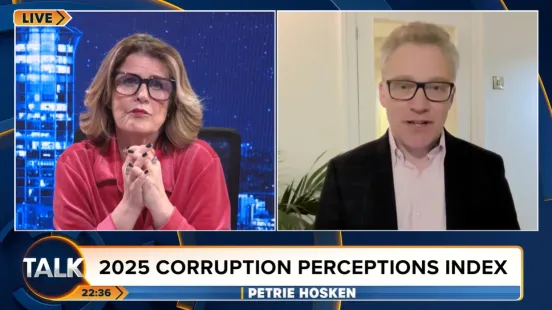
Chief Executive, Daniel Bruce speaks to Talk TV's Petrie Hosken about the UK's continued decline in the Corruption Perceptions Index.
The new UK Anti-Corruption Strategy
In December 2025, the government launched a much anticipated new UK Anti-Corruption Strategy. The plan has more than 100 commitments cutting across our strategic objectives such as stopping the flow of dirty money and securing integrity in politics.
Its breadth was in no small part due to the successes of our own public advocacy and that of our allies over several years. This work also meant we were well placed to judge what it got right and where it fell short. While we welcomed the strategy’s overall approach, we were equally clear about the gaps, and those gaps now shape our campaigns for the year ahead. Additionally, we will adapt this UK strategy as we work to advance Scotland’s first anti-corruption strategy.
The strategy accepts the case we have long made: that corruption is a direct threat to the UK’s economy, security and democracy, not a distant problem confined to countries abroad. It includes practical commitments such as the expansion of the City of London Police Domestic Corruption Unit and the creation of a corruption evidence hub to track the scale of the problem. Local government reforms also feature: a mandatory code of conduct for elected officials with enforceable sanctions, and a new independent Local Audit Office.
Hiding illicit wealth
The strategy announced a major review of asset and beneficial ownership, which will examine vulnerabilities that let criminals hide their dirty money, with an anti-money-laundering and asset recovery strategy due to follow in 2026. It is hoped the review will dismantle these loopholes and we will be following its progress closely.
Crown Dependencies and Overseas Territories
Here, the strategy sets out red lines, making clear how it expects the Crown Dependencies and Overseas Territories to provide access to beneficial ownership data on companies for journalists and civil society. However, seven years have passed since these reforms were first promised, and the strategy fails to offer a clear plan to make delivery happen.
Professional corruption enablers
Alongside reforms to supervisory systems, the strategy will deliver a new coordinator to focus on the professional enablers who help move illicit money through the system. This is a welcome development that is a good sign that the government is looking to broaden the scope of regulated sectors and we have pressed for that wider remit to include property developers.
Political financing and integrity
This is where the strategy is weakest. It acknowledges the corrosive power of big money in politics and the work of restoring trust in government, yet offers little in the way of concrete action on the reforms that matter most. Measures already delivered such as the Ethics and Integrity Commission, are noted but caps on political donations and lower spending limits are absent, leaving the UK's political system vulnerable to the corrupting influence the strategy claims to tackle.
Illicit Finance Summit
The government will also host an Illicit Finance Summit, bringing together governments from around the world to form an international coalition to disrupt the flow of dirty money worldwide. It is a welcome platform and one we will use to press for tangible commitments and not just warm declarations.
We continue to call on the government to:
- Close loopholes that enable illicit wealth to stay hidden.
- Take big money out of politics and strengthen safeguards against abuses of power
- Reform oversight of anti-money laundering rules in high-risk sectors, ensuring proper supervision of lawyers, accountants and professional enablers.
- Secure clear, time-bound commitments from the Crown Dependencies and Overseas Territories to deliver greater access to beneficial ownership data.
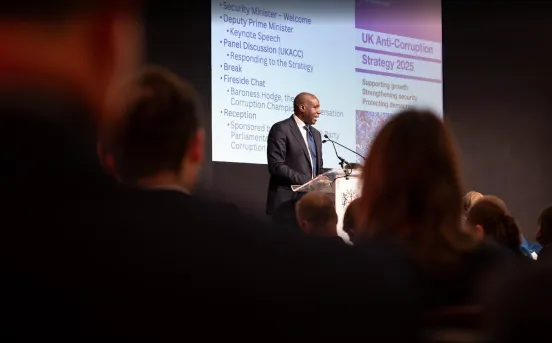
Former Justice Secretary, David Lammy speaking at the launch of the Anti-Corruption Strategy
UK Programmes in review
Stop the flow of dirty money
For too long, the UK has provided a safe haven for corrupt elites wanting to hide and launder their wealth here. This year, our investigations, research and advocacy helped turn that pressure into results, helping trigger sanctions and asset freezes, strengthen the UK's anti-money laundering supervision, leave Companies House better funded to fight economic crime, and expose the secrecy of offshore jurisdictions.
Delivering reform of the UK’s anti-money laundering supervision
In October 2025, after a decade of our campaigning, the UK Government announced bold new plans to shake up the policing of anti-money laundering rules in high-risk sectors. The reforms promise stronger oversight of lawyers, accountants and other professional enablers who act as gatekeepers for dirty‑money. It is the kind of key structural change that closes the doors through which illicit wealth has long entered the UK.
Freezing illicit assets linked to foreign political elites
We warned way back in 2015 that the UK’s Tier 1 (Investor) visa scheme allowed high‑risk individuals and organisations to buy residency with almost no checks. Among them was the Prince Group. In October 2025, the UK and US governments sanctioned its leader, Chen Zhi, for his role in this transnational organised criminal network. The UK government also froze over £175 million worth of UK property owned by the Group and its associates, following findings we first reported with Radio Free Asia in 2024. We continue to investigate the Group’s UK-linked assets, which were shielded for years by high level political protection in Cambodia.
Setting global agenda on illicit finance
Our research featured directly in the government’s 2025 National Risk Assessment on Money Laundering and Terrorist Financing including our finding that 170 UK properties were bought using suspicious wealth, and owned via complex trust structures designed to obscure their true owners. This clearly shows the impact of our work – not just used to make the case to government but used within it in the key documents that shape national policy.
Funding Companies House to fight economic crime
In February 2026, Companies House doubled the fee for registering a new company, meeting our call for it to fund its contribution to economic crime enforcement. This modest change helps give Companies House more resources to enhance its enforcement capabilities and, alongside law enforcement, take a more active role in shutting down suspicious shell companies.
Offshore jurisdictions fail to meet transparency obligations
The legitimate interest registers in some of the Overseas Territories, such as the British Virgin Islands (BVI), are not delivering what was promised. Rather than opening up corporate transparency, the BVI’s register makes it difficult for journalists and NGOs to uncover the true owners of companies, maintaining the region’s long-standing culture of financial secrecy. We will continue pressing for real transparency and holding to account those jurisdictions that have failed to deliver what they promised.
Protect the public's resources
When the pandemic struck, billions of pounds of public money were spent at speed and with little scrutiny. Much of it bought protection the country urgently needed. Some of it did not — lost to overpriced contracts, unusable equipment and deals handed to the politically connected. Our investigations have tracked that failure since 2020, and this year that long effort fed into the public reckoning now under way.
The long road to the Covid-19 inquiry
Our work began in 2020, when we analysed thousands of contracts for corruption risks and found systemic bias in how public money was awarded: uncompetitive procurement, contracts published late or not at all, and deals shaped by political connections. We warned at the time that emergency procurement rules were being used far beyond what the crisis justified. Our deeper investigation, Behind the Masks, reviewed over 5,000 contracts and identified 135 high-risk contracts worth around US$20.6 billion (£15.3 billion).
This work later fed into core modules of the COVID-19 Inquiry, including Module 5 (Procurement), which reported in July 2026.
Supporting the Covid Counter-Fraud (Corruption) Commissioner
The government’s Covid Counter-Fraud Commissioner, Tom Hayhoe, spent 2025 reviewing the fraud and losses from the pandemic years. We provided considerable support and guidance to his work, drawing upon our earlier investigations. We were disappointed his final report paid insufficient attention to cronyism and corruption risks in PPE contracts, and to the lack of scrutiny of testing, though we welcomed his assurances that legal recovery efforts continue.
Our long-running work in this area and support to the commissioner were recognised at a Downing Street reception in January 2026.
Ongoing developments and media interest
This scandal is not all in the past, and our work continues. After an October 2025 High Court ruling ordered PPE Medpro to repay US$161 million (£122 million) to the government for supplying unusable gowns, we provided expert commentary on the development across BBC News, BBC 5 Live, 5 News, Talk TV, The Guardian and The Mirror.
Then, later in 2025, Medpro filed for bankruptcy with insufficient assets to repay what it owed, which highlighted just how costly the ‘VIP lane’ was to the public purse at a time it could least afford it. This money, meant for frontline protection in a national emergency, may never be recovered.
Our work also reached a wider audience through Covid Contracts – Follow the Money, a hard-hitting ITV documentary in September 2025 that drew on our research and became one of the most-watched programmes on ITV’s on-demand service during the launch week.
In Scotland, where devolved responsibility for some of the actions triggered by the inquiry is in play, we are members of the Covid Inquiry Response Engagement Group and have been able to contribute significantly both to transparent ways of working by the group and to the Scottish Government commitments in response to module reports.
Secure integrity in politics
Standards in public life have remained an area of weakness following a series of political scandals – from ministers’ past acceptance of gifts and hospitality to the conviction of a former MEP on several bribery offences and police investigations of former ministers and royalty for misconduct. Against that backdrop, our long campaign to take big money out of politics moved from argument to legislation, and the government took its first real steps to limit some political donations. These changes are not yet enough, and we will continue pressing for more.
Taking big money out of politics
We’ve long made the case that large, opaque donations corrupt the integrity of our politics. This year that case began to bite. Through events, briefings, explainers and sustained engagement with politicians and policy makers, we built pressure ahead of the anticipated elections bill, and in February 2026, the government introduced legislation to deliver the Labour Party’s manifesto pledge to tighten controls on political donations.
We submitted evidence to the Bill Committee and the government’s parallel review of foreign interference. When the Rycroft Review into foreign financial interference in UK politics reported in March 2026, the government acted: an immediate moratorium on cryptocurrency donations, and a £100,000 annual cap on donations from overseas voters. A cap on donations and tighter rules on cryptocurrency are both reforms we had called for.
But the job is only half done. A cap on overseas donors does nothing about the UK-based mega-donor writing a seven-figure cheque, and that is where the greatest risk to our politics now sits. We continue to work in coalition with civil society and backbench MPs to persuade ministers to be bolder and remove big money from politics through an annual cap on individual donations and tighter spending limits.
Holding the new standards system to account
In October 2025 the government launched the Ethics and Integrity Commission as a replacement for the Committee on Standards in Public Life. We welcomed it, whilst sharing our concerns that the new body lacked sufficient powers and legal backing to do its job. We set out why in detailed written evidence to the Public Administration and Constitutional Affairs Committee, analysing the new arrangements, including a comparison with the far more ambitious 2021 recommendations of the Committee on Standards in Public Life to show how far the reforms fall short of these proposals.
Pressing for integrity in Westminster, Holyrood and the Senedd
In May 2025 we challenged the House of Commons Standards Committee on MP’s second jobs, making clear that outside employment should be a narrow exception, not the commonplace practice it has become.
In Edinburgh, our team gave evidence to the Scottish Parliament’s Standards, Procedures and Public Appointments Committee as MSPs discussed proposals to introduce new rules to recall members who breach standards. And in Wales, as recall provisions for Senedd members were agreed, our advocacy ensured that lay members will be included on their Standards of Conduct Committee to avoid political capture as individual cases of standards breaches are considered. Across Britain, we are pushing the same principle: that those who hold public office should be held to the high standards the public expects.
Drive integrity in business
As the 2025 CPI made clear, the global integrity environment is deteriorating, and enforcement is growing less predictable. This leaves businesses operating in increasingly unpredictable contexts, making collective action and proactive approaches to compliance and integrity critical for business resilience. It also makes our work with businesses and investors more important than ever. This year we helped hundreds of companies build that resilience, and saw our approach recognised by the wider responsible-investment community.
Convening critical conversations on ethics and compliance
Our calendar of events convened 400 participants from across the anti-corruption, ethics-and-compliance and responsible investment community. Collaborating with over 30 expert speakers, we shared key insights through our Business Integrity Forum, Corporate Anti-Corruption Benchmark Service and wider business engagement on cutting-edge topics to reinvigorate capacity and commitments for promoting integrity in business. Discussions covered the need for ethical guardrails and human oversight, as companies grapple with using artificial intelligence tools for compliance, integrated risk management as corruption, fraud, sanctions and sustainability risks increasingly converge, and managing political-influence risk and ensuring responsible lobbying in a changing landscape. We also launched our latest guidance for investors on managing business integrity risk in impact investing.
Strengthening transparency in company reporting
Having access to reliable public information on how companies are managing risk is critical for assessing company performance and accountability. Through our research and responses to public consultations on sustainability reporting standards, we are helping investors better manage business integrity risk by requesting decision-useful information from investee companies and we are shaping what information companies disclose on their anti-corruption, whistleblowing, governance and political engagement activities.
Investing with Integrity project praised for its transparency and clear theory of change
Our three-year partnership with British International Investment to enhance business integrity in impact investing produced its latest guide this year, A Guide to Managing Business Integrity Risk in Impact Investing, drawing on the insights and expertise of over 100 global experts on anti-corruption, investing and sustainability.
This project was shortlisted for the Principles for Responsible Investment 2025 awards in the Innovation in System Stewardship category with judges praising it as an outstanding example of system stewardship built on a strong theory of change and sustained collaboration. That external recognition matters: it marks out the model as one the wider sector now wants to learn from.
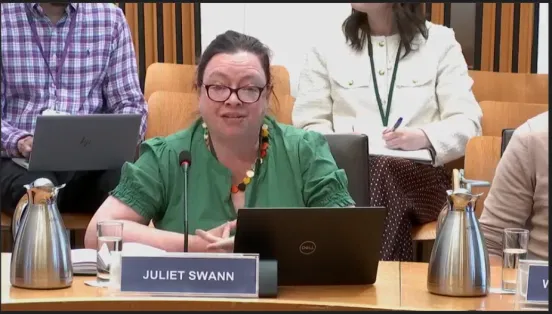
Nations and Regions Programme Manager, Juliet Swann giving evidence to the Scottish Parliament’s Standards, Procedures and Public Appointments Committee on the recall of MSPs.
Global Programmes in review
Defence and Security
This was the year defence integrity moved up the international agenda, and our work helped put it there. As military spending rises sharply across Europe and beyond, we made the case — to governments and institutions that had not always wanted to hear it — that more money without more integrity is a risk, not a solution.
Shaping UN policy and global governance
Our work fed into the UN Peacebuilding Architecture Review, which for the first time included explicit references to good governance. The UN Secretary-General’s report The Security We Need draws directly on our Government Defence Integrity Index (GDI) report and our written submissions, echoing our core policy case at the highest level of global governance.
Setting the terms of Europe’s rearmament debate
As Europe rearms, we directed significant time and resource to framing and coordinating an anti-corruption and integrity response to that build-up, and this work drew the attention of the institutions that matter. NATO, the EU, the World Bank, the UN, the Organization for Security and Co-operation in Europe (OSCE) and multiple European governments all reached out to us — a measure of the credibility and influence our work carries.
We worked with the European Investment Bank Group and European Peacebuilding Liaison Office in developing the Security Action for Europe plan, helping shape policies that will sit at the centre of how Europe's defence spending is governed.
At the Munich Security Conference, we hosted a side event, Rethinking Capability, Integrity and Effectiveness in a New Era of European Defence, in partnership with the Basel Institute on Governance. It convened former prime ministers, parliamentarians, leading defence companies, think-tank leaders and president of the European Central Bank, Christine Lagarde, around a single argument: that defence governance must keep pace with defence spending to ensure sustainable capability and resilience.
Major global reports
Our report Sabotaging Peace, launched at the UN Human Rights Council in June 2025 examined how corruption fuels conflict and undermines peace processes. We followed it, in August 2025, with External Auditing of the Defence Sector in Mali: Challenges and Possibilities, which exposed significant weaknesses in the country’s external oversight systems as its military spending grows.
The launch of the 2025 GDI Sub-Saharan Africa wave in March 2026 expanded the evidence base on defence governance across 17 countries and helped build momentum for reform. The accompanying country briefs placed the findings in national context, increasing their relevance for advocacy and engagement. A launch webinar generated strong early interest, while the forthcoming Africa report will deepen regional analysis and support continued action.
Global Health
Corruption in health is not an abstraction. It is the bribe that determines who gets treated, the medicine that never reaches the shelf, the clinic with no one staffing it. This year our global health programme grew into a recognised technical authority on these risks and extended its work into some of the places where the human cost is highest.
Strengthening integrity in health systems
Our global health team is increasingly recognised for its expertise on corruption risks in health procurement, supply chains and medicine quality — areas with direct impact on whether patients get safe, effective care. Our major three-year project in Indonesia targets corruption risks in medicines pricing, working to root out the inefficiencies and integrity failures in supply chains that keep affordable, quality-assured medicines out of people’s reach.
Policy engagement
We produced a policy brief synthesising evidence from Madagascar, the Democratic Republic of the Congo, Zimbabwe, Ghana and Rwanda, with actionable recommendations for high-level policy forums. A further report, co-authored with U4, examined donor funding and anti-corruption strategies in the health sector, with meetings planned with funders in 2026 to turn its recommendations into practice. The AI-driven Global Health Atlas, meanwhile, mapped corruption risks across multiple countries, bringing these notoriously opaque problems into clearer view.
Protecting Sexual and Reproductive Health and Rights (SRHR)
Our newest work reaches into gendered health corruption. Funded by the Swedish International Development Cooperation Agency, a major new project examines how corruption blocks women’s and girls’ access to sexual and reproductive health services across Bangladesh, Ecuador, Tunisia and Zambia. It tracks the everyday ways the system fails them: informal bribes, medicine shortages, health‑worker absenteeism, denial of services, and a lack of procurement and budget transparency. The data will feed into a risk dashboard mapping where the dangers are greatest, so that advocacy and reform can be aimed at the areas where they will matter most.
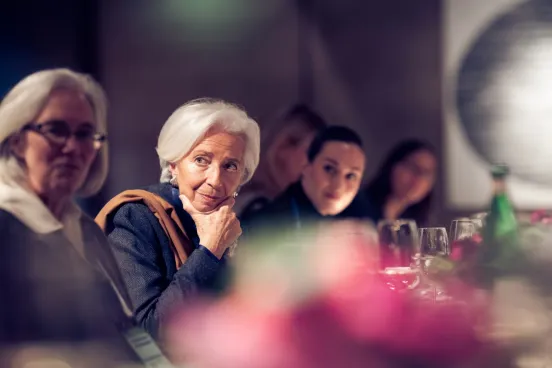
President of the European Central Bank, Christine Lagarde, at TI-DS' Rethinking Capability, Integrity and Effectiveness in a New Era of European Defence event.
Downloads
Document
Annual Impact Report and Accounts
(5.09 MB)