Read more

Today, Transparency International published the 2025 Corruption Perceptions Index, and the results should give us all pause. For the third consecutive year, the UK remains stuck at 20th place globally. More concerning still, our score has fallen to 70 out of 100 - the lowest in the Index's history since its major revamp in 2012.
This isn't just about numbers on a chart. It's about what those numbers represent: a gradual but persistent decline in the UK’s reputation for good governance.
A worrying trend
When I look at where we've come from, the trajectory is stark. Less than a decade ago, in 2017, the UK sat comfortably in the top ten countries worldwide. We scored 82. Today, we're at 70, having dropped from 71 just last year. This year's Economist Intelligence Unit assessment specifically downgraded the UK's score for corruption in government and public office.
The data collection period for this year's Index covers the highest spending general election campaign in British history—one fuelled by mega-donors pouring millions into their parties of choice. It covers ongoing cash-for-access scandals and questionable public appointments.

But these political scandals have not stopped since then. As this year’s results are published, Peter Mandelson’s latest resignation from public life continues to lead the headlines with a live criminal investigation for misconduct in public office over alleged leaks of sensitive information to convicted sex offender Jeffrey Epstein.
These aren't isolated incidents that flare up in the headlines for a few days before disappearing. They represent a systematic - one that gradually chips away at public trust in our democratic institutions.
Why this matters
The Corruption Perceptions Index draws on the views of experts and business leaders across eight independent sources. It's their assessment of corruption risk in the UK's public sector. And what they're telling us is that the perception of corruption in British politics is not bouncing back. There are no grounds for complacency.
This matters profoundly. When people lose faith in the integrity of their political system, when they believe that access and influence can be bought, when they see appointment processes that bypass proper scrutiny - democracy itself is weakened. The social contract between citizens and their government begins to fray.
We're at risk of normalising a level of corruption concern that would have been unthinkable just a few years ago. The question we face is whether we accept this as the new baseline, or whether we demand better.
Only real reform can turn the tide
The current government came to power with a stated commitment to restore integrity in public life. That's welcome. But today's CPI results demonstrate that warm words and paper commitments aren't enough to turn the corner.
If we're serious about regaining our place among the world's most trusted democracies, we need bold, structural reforms:
First, we must remove the corrupting influence of big money from politics. That means meaningful donation caps, reduced campaign spending limits, and greater transparency over the source of funds entering our political system. When a single donor can give £15 million to a party in less than a year, or when reports suggest £85 million donations are being considered, we have a system that's fundamentally out of control.
Second, we need genuinely open government. This means extending transparency requirements to all lobbyists and requiring detailed disclosure about their interactions with government - who they're meeting, when, what they're trying to influence. Countries like Canada, Germany, and the United States already do this. We should too.
Third, we must end the cronyism that undermines public trust. This includes addressing corruption-prone practices like MPs holding second jobs, reforming the appointment process for the Lords, and ensuring that all public appointments follow proper due process regardless of a candidate's relationship to a political party.
Around the world
It's worth noting that the UK's challenges aren't happening in isolation. The CPI average score globally has dropped to 42 - its lowest level in more than a decade. More than two-thirds of countries score under 50. Even established democracies, typically stronger on anti-corruption, are experiencing worrying declines. The United States, Canada, France, Sweden—all have seen their scores deteriorate.
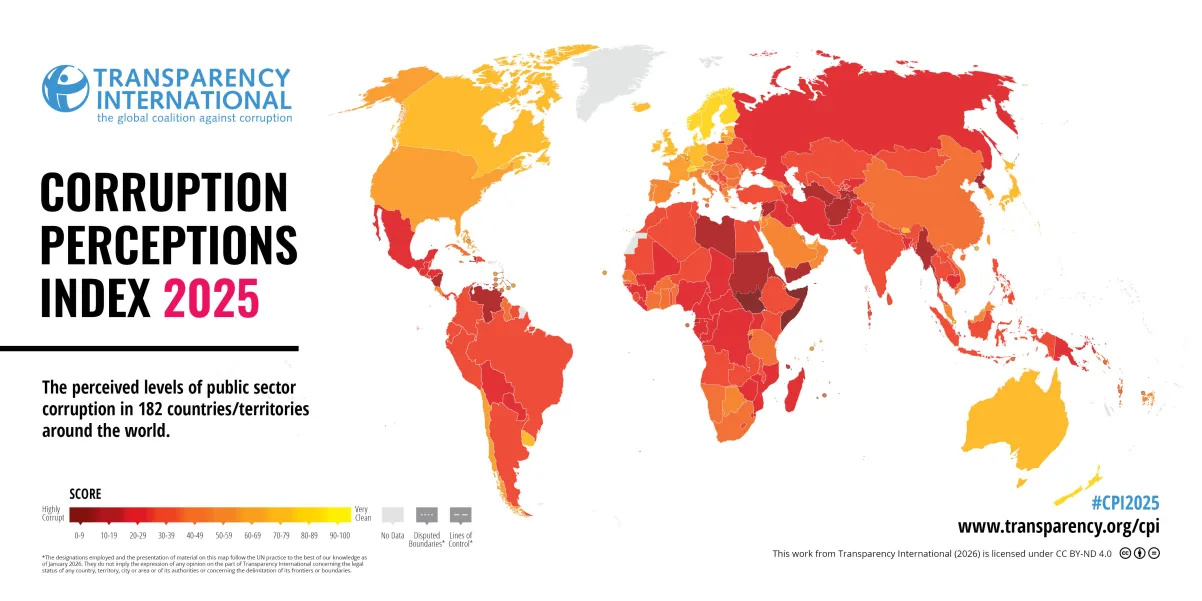
This tells us that the challenges we face are part of a broader democratic backsliding that's occurring across the developed world. But it also means the need for leadership, for countries to demonstrate that integrity in public life is achievable and worth fighting for, has never been greater.
The year ahead
Despite the challenging baseline these results present, I see real opportunities ahead. The government has committed to an elections bill, which could deliver meaningful reform on donation caps and campaign finance. In June, the UK will host an Illicit Finance Summit—a moment to demonstrate global leadership on anti-corruption commitments.
These are moments we can build upon. The public appetite for change is clearly there. People want to see their democracy work for them, not for those with the deepest pockets or the best connections.
At Transparency International UK, we're doubling down on our advocacy work. We'll be holding government to its stated commitment to restore integrity. We'll be making the case for the reforms that can actually shift the dial. And we'll be working with partners across civil society, business, and politics to build the coalition for change.
Because here's what I fundamentally believe: the UK can regain its reputation. We can return to the CPI's top ten. But only if we're willing to confront the uncomfortable truths these results reveal, and only if we're prepared to make the structural changes our democracy needs.
The choice before us is clear. We can accept declining standards as the new normal, or we can demand the integrity our democracy deserves. I know which path I believe we should take.
The work begins now.