
Researchers
Rose Whiffen Date of publication
2 March 2026
Download
Document
Taking Big Money Out of Politics
(2.01 MB)
Summary
Money has a corrosive impact on UK politics, which has worsened over the past decade. Threats to the integrity of governments, parliaments, planning, procurement and national security include a recurring theme: the connection between cash and what that can buy in our democracy. The latest allegations against Peter Mandelson, if proven true, will no doubt cement the widespread public view that wealth buys high-level access and influence,
It is time for decisive action. Bold reform is needed to arrest plummeting faith in our democracy and protect our country from undue influence. This briefing provides an overview of the problem at hand, and how Parliament can act now to stop it.
Weak laws have renewed an arms race in election spending
In 2023 the UK Government raised national campaign spending limits by 80 per cent
without evidence or clear justification.
Increasingly, political parties are turning to mega donors to pick up the tab
In 2015, only 1 per cent of private donations came from companies and individuals giving £1 million or more; by 2024, this had risen to over a third. At this rate over half of all political contributions could soon come from just a dozen or so individuals, who would account for less than 0.00002 per cent of those eligible to donate.
This growing dependency on the ultra-wealthy to fund politics risks turning democracy into a plaything of the rich
Donations buy access, potential influence and honours.
The public think big money is a problem - and they want a cap on donations
The public hold strong and consistent views that money talks too loudly in our democracy, and there should be stronger rules to control it. Previous polling results show that, of respondents:
- 84 per cent believe wealthy individuals use political donations to advance their interests
- 63 per cent think the very rich have too much political sway
- 67 per cent say there should be a cap of £50,000 or less – or no private donations
at all
There are also strong correlations between low levels of trust in our political institutions, and voters feeling they have no political voice – an issue made worse by the UK’s big donor problem.
The same loopholes in our law for big money present a vulnerability to foreign interference
As noted by Parliament’s Intelligence and Security Committee, political finance is a vector through which the UK’s adversaries may seek to gain influence.
It's time to take big money out of politics
Before the last election, the Labour Party committed to protect democracy by strengthening the rules on political donations, and pledged to put the national interest
above personal or partisan concerns.
The Representation of the People Bill is an opportunity to deliver on those promises.
We call on MPs to:
- End the arms race by reducing campaign spending limits to a more meaningful level.
- Cap political donations to stop the sale of our democracy, as is the case in Canada and Australia.
- Increase transparency over contributions to provide assurance over sources of political funding, and aid enforcement of the law.
Weak laws have renewed an arms race in election spending
Despite parties becoming more efficient at targeting their messaging, campaign expenditure at major polls has increased substantially. The 2024 election saw parties and their candidates spend the most in modern UK history – over £90 million,
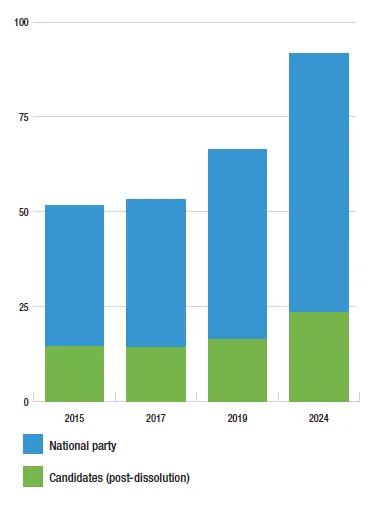
Though imperfect, the existing controls on national campaign expenditure have the potential to provide a level ceiling on costs – controlling the demand for fundraising – so long as they are set at an effective level. However, they are currently too high to be meaningful (see Figure 2).
Lowering the national party spending limits by around half and including election-related staff costs would significantly reduce the pressure on fundraising and associated corruption risks, and deliver on previous recommendations by the Committee on Standards in Public Life (CSPL) and the Electoral Commission.
![Figure 2: Regulated party spending by the Conservatives, Labour and Liberal Democrats, 2015 – 2024, compared to national spending limits (£ millions) [Source: Electoral Commission]](/sites/default/files/styles/paragraph_wide_image_on_desktop/public/2026-03/Screenshot%202026-03-02%20075610_0.png.webp?itok=UwDT4Wed)
(£ millions) [Source: Electoral Commission]
Increasingly, political parties are turning to mega donors to pick up the tab
Unlike other parliamentary democracies, such as Canada and Australia, the UK does not limit how much any individual or organisation can donate to a political party or its members – despite all the largest parties in Parliament supporting the introduction of a limit of some kind over the past 20 years. Because of inertia by successive governments, the UK’s big money problem is getting worse.
In the rush to spend more than their competitors, some parties are increasingly reliant on mega donors as a quick way to pay their bills. In 2015, only 1 per cent of private donations came from companies and individuals giving £1 million or more; by 2024, this had risen to over a third (35 per cent). At this rate over half of all political contributions could soon come from just a dozen or so people, who would account for less than 0.00002 per cent of eligible voters.
Not only do million-pound contributions make up a growing portion of parties’ donation income, but the size of these gifts is also increasing. What were once lump sums of £1 million – £2 million are now given in amounts four to five times that size. This has major implications for the sustainability of our democracy.
Parties’ dependence on a small group of people for a growing proportion of their income increases the precarity of their finances. Were just one of these donors to withdraw their support, it could leave party treasurers with a 10-20 per cent in-year budget deficit to fill.
Big money presents an existential threat to parties who fail to diversify their funding.
![Figure 3: Percentage of private contributions from individuals and companies donating £1 million or more, 2015 vs. 2024 [Source: Electoral Commission]](/sites/default/files/styles/paragraph_wide_image_on_desktop/public/2026-03/Untitled-1.gif.webp?itok=vSFn5TaX)
This growing dependency on the ultra-wealthy to fund politics risks turning democracy into a plaything of the rich
The amounts now given are unprecedented and beyond the means of ordinary voters.
Financier Chris Harborne’s £9 million gift to Reform UK, the largest single political contribution from a living donor would take the average person around 3,000 years to match.
Nigel Farage rejects the claim Mr Harborne has asked for anything in return for his donation.
- a £150,000 donation from Bloomberg followed weeks later by senior Labour figures, including the Prime Minister and Chancellor, meeting with the company to discuss unannounced financial services policy
- the ‘Advisory Board’ established to solicit political contributions over £250,000 in return for exclusive access to the then Prime Minister and Chancellor, whose members included a financier convicted of campaign finance violations in the US
the Westferry Printworks scandal, in which the then Secretary of State intervened on behalf of a party donor after being lobbied at a private fundraising event – a decision later quashed for being unlawful and could have cost the Tower Hamlets residents over £40 million in community levies for essential infrastructure
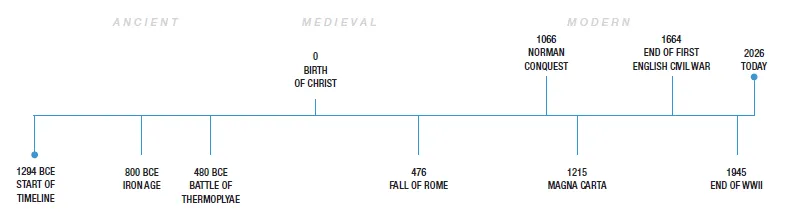
Figure 4: Time needed for an average person (donating their entire disposable income of £2,712/year) to match on political donation of £9 million
The public think big money is a problem - and they want a cap in donations
The overwhelming majority of the public are concerned about the influence money can buy in politics.
In 2025, polling commissioned by Transparency International UK revealed 84 per cent of those surveyed believed wealthy individuals use political donations to advance their personal interests.
When asked about the size of a cap, voters have consistently opted for lower figures. In YouGov’s December 2025 tracker survey, two thirds of respondents thought donations should be limited to £50,000 or less – or that there should be a ban on private donations.
There are also correlations between the public’s dim views on big money in politics, their own perceived lack of voice in democracy, and a growing distrust in public institutions. Research by the OECD found that trust in government was particularly low amongst those who thought the political system does not give them a say.
Despite overwhelming public support for change, there are still voices claiming that a donation cap is impractical. However, our modelling shows that even without major adjustments to fundraising practices, parties could sustain high levels of income under a relatively low cap, without having recourse to additional public funds.
Other democracies, such as Canada, Australia and Italy, also show what is possible if there is enough political will to change. In 2025, Australian passed a new law limiting political contributions to AUS$1.6 million annually (c£800,000). Though a major shift in the country’s electoral rules, the cap is substantially higher than elsewhere. For example, Italy does not allow political donations over EUR 100,000 (c£87,000) within a year, while the maximum in Canada is CA$5,250 (c£2,800).
us beyond the broken status quo.
The same loopholes in our law for big money present a vulnerability to foreign interference
History shows the need for tighter laws on who can fund our politics, and meaningful disclosure to help monitor and ensure confidence in the rules.
As Parliament’s Intelligence and Security Committee’ noted in its Russia report, political finance is a vector through which the UK’s adversaries may seek to gain influence.
MPs have accepted generous hospitality from regimes overseas, and subsequently lobbied on their behalf.
The donation reporting rules – a key means to preventing evasion of the law – also need revisiting. The previous Government increased disclosure thresholds by 40 per cent, with some now over 100 times larger than those in the US and Canada, where contribution limits apply.
To counter the foreign influence threat and strengthen enforcement of the law, donations should be publicly disclosable at a much lower level than currently required.
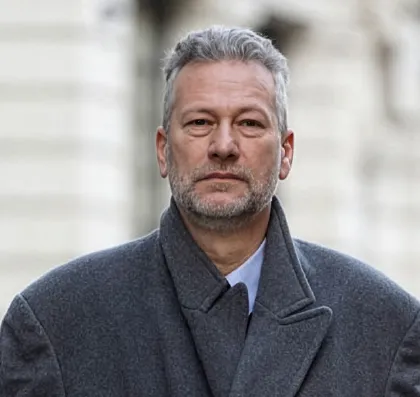
Nathan Gill, former MEP for the Brexit Party, arrives for sentencing at Old Bailey in London, United Kingdom on November 21, 2025 after pleading guilty to eight counts of bribery under the Bribery Act 2010.
It's time to take big money out of politics
Before the last election, the Labour Party committed to protect democracy by strengthening the rules on political donations, and pledged to put the national interest above personal or partisan concerns. The forthcoming Representation of the People Bill is an opportunity to deliver on those promises. We call on MPs to…
-
End the arms race
Reduce campaign spending limits to a more meaningful level, stopping the escalating competition for donor money. Currently, national party campaign expenditure controls are too weak to stop a renewed arms race for funding, which increases the pressure for parties and politicians to engage in high-risk fundraising. The Committee on Standards in Public Life (CSPL) had proposed reducing them to around £16 million at UK general elections, and including campaign staff costs within the scope of these rules. These proposals should be the maximum allowed, with scope to reduce them further following post-implementation review. Parliament should also remove Government’s ability to unilaterally increase the limits via secondary legislation.
-
Cap political donations
Cap how much donors can give annually, preventing wealth buying political access and influence. The UK is an anomaly amongst its peers for not limiting how much any individual or organisation can give in political donations. Previously, the CSPL had proposed a cap of £10,000. Our modelling suggests that under a reduced spending limit, an annual donation cap of £50,000 could be achieved by 2030 through a progressive series of yearly caps, without the parties needing recourse to additional public funds.
-
Increase transparency
Require meaningful donation disclosure to ensure political funding comes from legal sources. Existing reporting thresholds are too high to be effective at helping monitor and secure compliance with the rules. They are also substantially above those in other advanced democracies. Equalising the UK’s political donation disclosure rules with the controls on foreign funding (£500) has the potential to strengthen enforcement of the law while reducing regulation.