

Watch Transparency International Defence & Security's side event co-organised with Besa Global from the 11th Conference of the States Parties to the UN Convention against Corruption (UNCAC).
Corruption and organised crime pose a serious and growing risk to international peace and security. Both are root causes, drivers and consequences of violence, chaos and insecurity. Against the backdrop of mounting global insecurity, rising military expenditure and concerns over the growing violence and national security risks caused by organised criminal and corrupt networks, especially in fragile and conflict-affected settings, we aim to explore how the UNCAC treaty can help to counter these threats before, during and after the outbreak of violent conflict.
The UNCAC provides a powerful tool for UN member states and entities to prevent and mitigate the impact that corrupt and criminal networks can have on conflict at all stages. Several steps have been taken in the past years to advance a closer integration of the nexus. At the CoSP10, UN Member States expressed their concern about the links between corruption and organised crime and their threats posed to the stability and security of societies, in resolution 10/5. The previous CoSP in 2021 saw a request for closer cooperation between UN entities in fragile and conflict-affected settings, as resolution 9/2 aimed to strengthen rule of law and anti-corruption measures in UN peacekeeping and peacebuilding efforts.
Speakers
-

Yi Kang Choo
Project ManagerYi Kang provides advocacy, research, and programmatic support to Transparency International’s Global Thematic Networks for Defence & Security and Global Health, aiming to combat corruption and promote good governance in these critical sectors. Originally from Malaysia, Yi Kang also engages with Chapters across the Transparency International Movement, particularly in the Asia Pacific region, to foster collaboration and drive impactful advocacy on related issues.
-

Cheyanne Scharbatke-Church
Besa GlobalCheyanne Scharbatke-Church is a practitioner-scholar with a lifelong interest in governance processes that have run amok. She has significant experience in peacebuilding, governance, anti-corruption, evaluation and learning across the Balkans, West and East Africa. She currently serves as the Executive Director of Besa Global, where she also co-leads the Corruption, Justice & Legitimacy (CJL) Program. In this capacity she has pioneered the application of systems thinking to corruption analysis and the role of social norms as a driver of corrupt practices. Cheyanne taught on the intersection of conflict and corruption as well as program design, monitoring and evaluation in fragile contexts at the Fletcher School, Tufts University for 15 years. Prior to this, as the first Director of Evaluation for Search for Common Ground she developed the organisation’s initial strategy to institutionalize an evidence and learning culture and practice. Her interest in understanding peacebuilding effectiveness started during her role as the Director of Policy & Evaluation at INCORE, University of Ulster. She has had the privilege of working in an advisory capacity with a range of organizations such as ABA/ROLI, CDA, ICRC, IDRC, UN Peacebuilding Fund and the US State Department. She can be commonly found in the Canadian Rockies with her fierce daughters and gem of a husband.
-
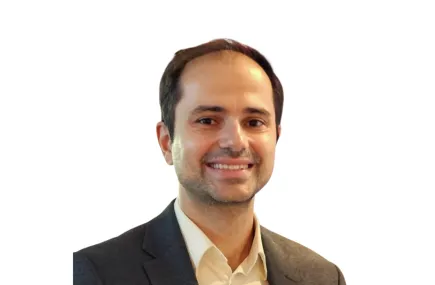
Jonathan Bourguignon
UNODCJonathan Bourguignon is a Crime Prevention and Criminal Justice Officer (Anti-Corruption) with the Office of the UN Office on Drugs and Crime (UNODC) in New York.
His work focuses on corruption, economic crime and illicit financial flows, in support of policy discussions at UN Headquarters and technical assistance delivery of field offices. He also leads the portfolio on addressing corruption in fragile and conflict-affected settings.
Before joining UNODC, Jonathan has worked as a staff and legal expert on transnational crime with the Council of Europe and the European Union, as well as lecturer in the French academia.
-
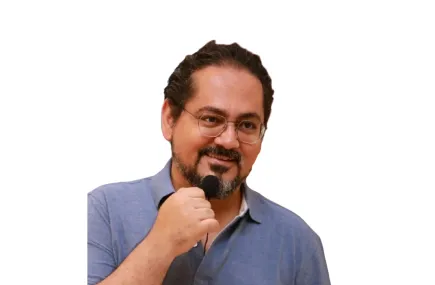
Arkan El-Seblani
UNDP Arab States Regional HubArkan El Seblani (Lebanon) is a jurist and an international civil servant specialized in the field of democratic governance and institutional development, focusing on anti-corruption and the rule of law. He holds a Bachelor of Laws from the Lebanese University and a Master of International and Comparative Law from the George Washington University. In his 18 years of experience, Mr. El Seblani supported reform policies and programs in more than 20 countries working with the United Nations, in addition to his experience with the Public Prosecution Office in Qatar and in private legal practice in Lebanon and the United States. Mr. El Seblani has published numerous articles and papers on law, public policy and sustainable development. He is also a member of various professional associations worldwide and a guest lecturer in universities around the globe and a regular speaker in international and regional fora.
-
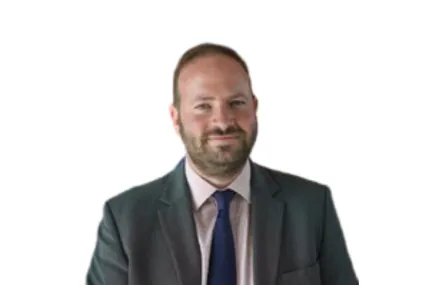
Ian Tennant
Global Initiative Against Transnational Organized CrimeIan leads GI-TOC’s engagement with the UN and the wider multilateral community. He joined the GI-TOC in 2019, and then spent several years managing the GI-TOC Resilience Fund and leading the organization’s multilateral engagement in Vienna. Before joining GI-TOC, Ian spent five years at the UK’s Permanent Mission to the UN in Vienna, where he led UK engagement with the UNODC and represented the UK in several prominent UN negotiations on organised crime and related issues. Ian has previous experience working in British politics, political consultancy and corporate communications. He has an MA in British Politics, and a BA in French and Hispanic Studies. Ian is currently the Chair of the Alliance of NGOs on Crime Prevention and Criminal Justice.