
Read more
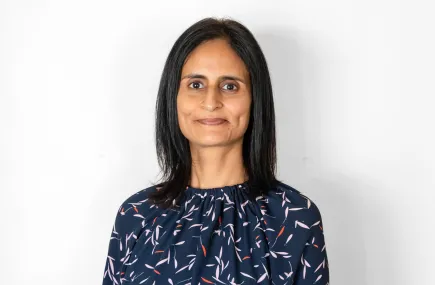
As Senior Director of Global Programmes, Sara oversees Global Thematic Networks based at Transparency International UK, addressing corruption in the global health and the defence and security sectors; working closely with other TI chapters around the world and the Berlin secretariat. She also steers TI-UK’s bilateral partnerships with other chapters to strengthen corruption prevention and identify opportunities to increase shared impact.
Sara brings senior leadership experience in designing, delivering and overseeing international development programmes to a high standard in 18 countries; working in different institutional capacities, including consultancy services, the UN, a donor agency and a private foundation.
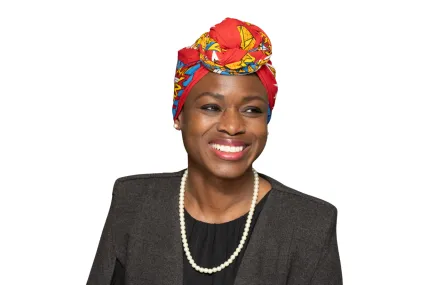
Sope Williams (PhD) is a professor of public procurement law and the deputy director of the African Procurement Law Unit, Stellenbosch University, South Africa. She is an expert in anti-corruption law, public procurement law and policy in Africa; procurement in the multilateral development banks; gendered corruption, gender-responsive procurement; emergency contracting and sustainable public procurement. She has written/co-edited 6 books: Fighting Corruption in Public Procurement (2012); Public Procurement and Multilateral Development Banks (2017); Public Procurement Regulation for 21st Century Africa (2018); Public Procurement Regulation in Africa: Development in uncertain times (2020); and Routledge Handbook of Public Procurement Corruption (2024); Routledge Handbook of Gender and Corruption (2025) and authored over 65 peer-reviewed publications. She co-developed and teaches on the LLM and PGDip in Public Procurement Regulation and Policy at Stellenbosch University, the first if its kind in Africa.
She has been globally recognised for her research and in December 2022, she was awarded the prestigious International Anti-Corruption Excellence Award for Academic Research and Education by the United Nations Office on Drugs and Crime (UNODC) and the State of Qatar. In 2014, 2019 and 2024, she was a recipient of Stellenbosch University’s Research and Innovation Excellence Award. In 2021 she was designated by the Open Contracting Partnership (USA) as an “anti-corruption champion.” In 2020 she was appointed as a research fellow by the University of Nottingham, UK, and in 2026, she was appointed as a distinguished visiting professor at George Washington University, USA. Her research was cited by the South African Constitutional Court in the case of Shaik v The State (2008), in which corruption allegations were levelled against former President Jacob Zuma. She has an LLM (with distinction) from the London School of Economics (2000), and a PhD in public procurement and anti-corruption law from the University of Nottingham, UK (2011).
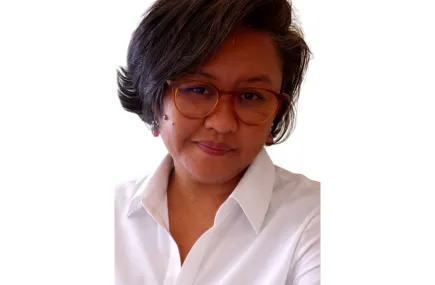
Mialisoa Randriamampianina (Mialy) is the Executive Director of Transparency International Initiative Madagascar, where she leads teams working on governance, transparency, anti-corruption, and the promotion of human rights.
The work carried out by Transparency International Initiative Madagascar focuses on diagnosing corruption risks in access to public healthcare and in the supply chains of medical inputs. The team has contributed to analyses of corruption risks within the health system, identifying gaps that can affect the availability and equitable access to essential services.
Mialisoa Randriamampianina has also contributed to the training of Malagasy and African journalists on understanding public healthcare access mechanisms and transparency issues, which has resulted in investigative journalism work on health systems and access to services in Madagascar.
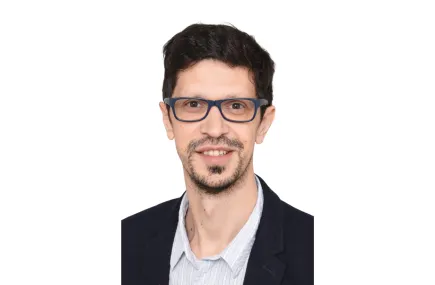
Zdravko Veljanov is a Post-Doctoral Researcher at the Department of Public Policy at Central European University and a Senior Analyst at the Government Transparency Institute. He holds a PhD in Comparative Politics from CEU.
His research focuses on democratic backsliding, corruption, and political polarization, combining quantitative approaches to corruption analysis and strategic sourcing with computational social science methods, including quantitative text analysis, large language models, QCA, network analysis, word embeddings, and ensemble machine learning.
He is actively engaged in applied policy and governance work. Through his role at GTI, he has contributed to projects with international organizations including the World Bank, Organisation for Economic Co-operation and Development, Transparency International, and United Nations Development Programme. His work includes corruption risk indicator development, public procurement analytics across multiple countries, and policy studies supporting anti-corruption authorities.

Mary Awelana Addah is the Executive Director of the Ghana Integrity Initiative, Ghana's leading anti-corruption organisation and the national chapter of Transparency International. Appointed to the role in September 2023, she brings more than a decade of experience in governance, accountability and anti-corruption programming, and is widely recognised for her advocacy on integrity, transparency and public sector reform in Ghana.
Mrs Addah joined the Ghana Integrity Initiative in 2009 as a Senior Programmes and Research Officer and was promoted to Programmes Manager in 2014, leading the design and implementation of major anti-corruption, governance and citizen accountability initiatives. Throughout her career, she has been a prominent voice in national discussions on corruption, public accountability and democratic governance, regularly engaging with policymakers, civil society organisations and the media to advance transparency and integrity reforms.
Before joining the Ghana Integrity Initiative, Mrs Addah worked with a range of public and civil society organisations, including the Ghana Trade and Livelihoods Coalition, the Centre for Community and Social Development, and the Ghana Education Service. Her extensive experience across governance, community development and public service has positioned her as one of Ghana's leading advocates for strengthening accountability and combating corruption in support of equitable and effective public services.
Corruption in health systems is one of the most significant but under-addressed barriers to equitable healthcare access globally. Its consequences are especially felt in Africa where it weakens already stretched public health systems and limits access to essential medicines, equipment, and services.
The consequences are especially severe for women, girls, disabled people, and rural communities, who rely most heavily on public healthcare systems and are often the first to be excluded when medicines are diverted, informal fees are imposed, or services fail to reach frontline facilities.
Across sub-Saharan Africa, where maternal mortality rates remain nearly three times higher than the global average, corruption and weak accountability continue to undermine progress towards Universal Health Coverage and the Sustainable Development Goals, particularly SDG 3 on health and wellbeing and SDG 16 on peace, justice, and strong institutions.
Join Transparency International Global Health to explore how to make the recommendations in our new policy brief Strengthening Integrity in Africa’s Health Systems – Combatting Corruption and Inequality a reality.
Our expert panel will discuss:
Expect to leave this webinar with a greater understanding of how increasing transparency and accountability within health sector procurement can increase the effectiveness of health care provision and advance universal healthcare for all.